
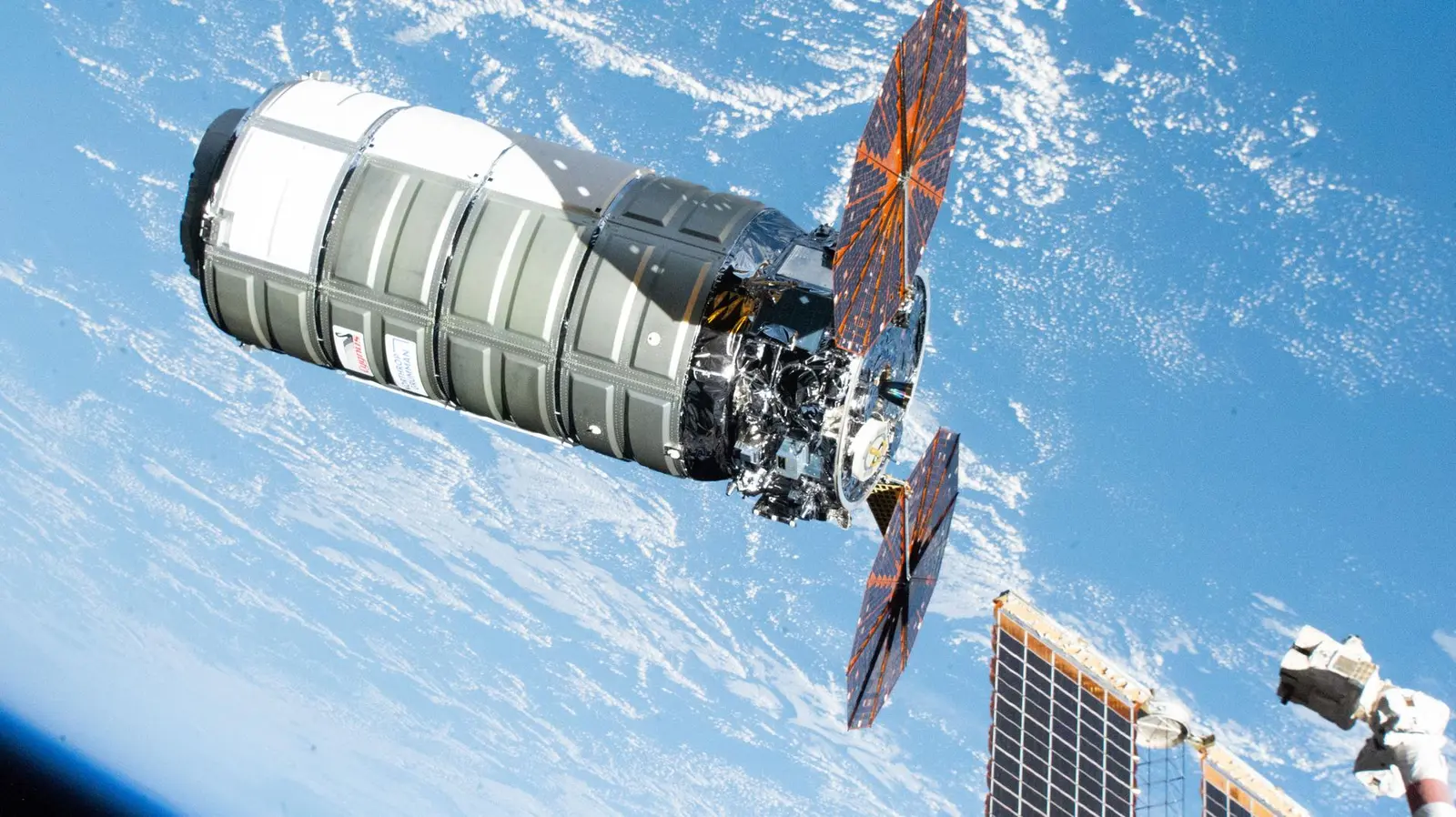
On Sunday morning, if the schedule holds, a Falcon 9 will lift off from Space Launch Complex 40 at Cape Canaveral with a cargo ship named for Jim Lovell on top. NASA’s target is no earlier than 10:47 a.m. EST on November 29. About 40 hours later, at 2:35 a.m. EST on Tuesday, December 1, astronauts Jessica Watkins and Luke Delaney are scheduled to reach out with the International Space Station’s robotic arm and catch it.
In between, about 11,000 pounds of experiments and supplies has to find a target roughly the size of a football field that is moving at about 17,500 miles an hour, and come to a stop beside it. The physics that gets it there is the same physics that places every satellite in Stowaway’s sky, and if the launch goes ahead you can watch it being used on purpose.
The ship
Cygnus is Northrop Grumman’s space freighter, and the Cygnus XL is the stretched version that first flew in September 2025. This is the third one. NASA calls the mission CRS-25 and Northrop Grumman calls it NG-25. The pressurized cargo module is built by Thales Alenia Space in Turin, Italy, and the XL can carry about 5,000 kilograms.
This load includes research on drug delivery for cancer and osteoarthritis, on predicting how cancer spreads, on treatments for muscle loss, on radiation sensing, and on growing food for long missions.
Cygnus only goes one way. It has no heat shield and cannot bring anything home. NASA says this one will stay at the station until May 2027, then leave with several thousand pounds of trash and burn up on the way down.
Northrop Grumman names each Cygnus after a person. This one is the S.S. James “Jim” A. Lovell, for the astronaut who flew Gemini 7, Gemini 12, Apollo 8 and Apollo 13, and who died in August 2025 at 97.
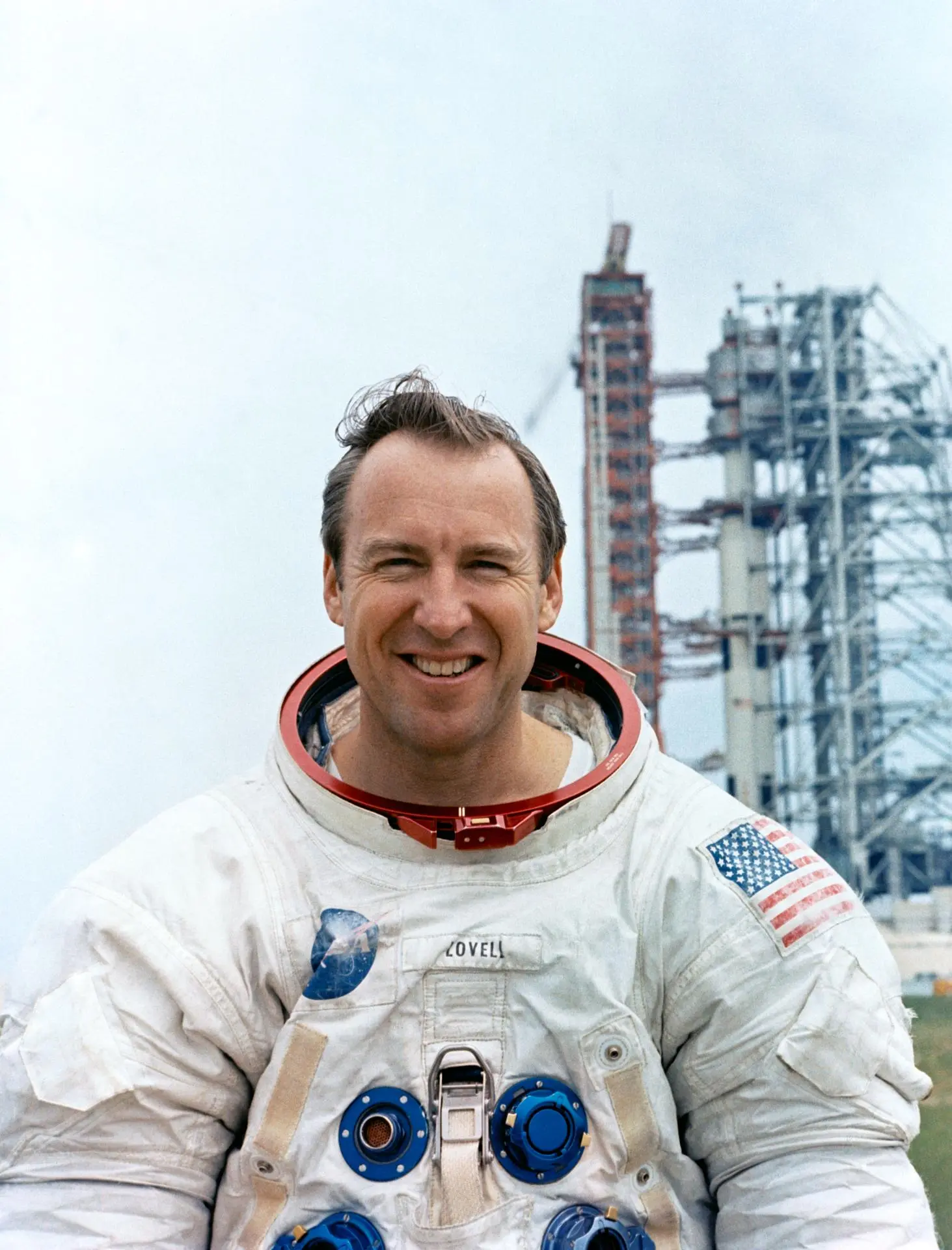
Jim Lovell in April 1970, training for Apollo 13. Photo: NASA.
The name suits a ship whose whole job is a rendezvous. On December 15, 1965, Gemini 6A flew up to Gemini 7, where Lovell and Frank Borman had been in orbit for eleven days, since December 4. It was the first time two crewed spacecraft met in orbit, and Lovell was aboard the target.
Why the launch time is given to the minute
The station’s orbit is a ring tilted 51.6 degrees to the equator. The ring stays nearly fixed in space while the Earth turns inside it, so the launch pad is carried through the plane of the ring as the planet rotates. The rocket has to leave very close to that moment. Every minute of delay turns the pad farther out of the plane, and fixing that in orbit costs more fuel than a freighter can spare. Some rockets can steer out a few minutes of error on the way up. A Falcon 9 flying to the station normally gets none, so a launch like Sunday’s has a window that is effectively a single instant: if the countdown stops, the attempt moves to another day.
To catch up, go lower
Launching into the right plane puts the ship on the same ring as the station. It does not put the ship next to it. The station might be a third of the way around the planet.
Closing that gap uses a rule that follows from what Johannes Kepler worked out four centuries ago: the lower an orbit is, the faster things in it go, and the less distance they have to cover per lap. The station is a little over 250 miles up and laps the Earth about every 93 minutes, between 15 and 16 times a day. Run the numbers and a ship in a circular orbit 100 miles below it moves about 200 miles an hour faster and finishes each lap more than three minutes sooner. So a freighter starts low and behind, and gains on the station with every lap.
Then it climbs in steps. Each engine burn raises the orbit and slows the rate of closing, until the ship arrives a short way below the station going almost exactly the same speed.
This is the part that feels backwards. In orbit, thrusting toward something ahead of you raises your orbit, and a higher orbit is a slower one with a longer lap, so the thing pulls away. Jim McDivitt found that out on Gemini 4 in June 1965, when he tried to fly up to his own spent rocket stage by pointing at it and firing the thrusters. It kept getting farther away.
The first Cygnus XL showed how much the plan depends on those burns. On its way up in September 2025 its main engine shut down early during two of them. NASA said a conservative software safeguard had tripped. Controllers planned a new set of burns, and the ship arrived a day late.
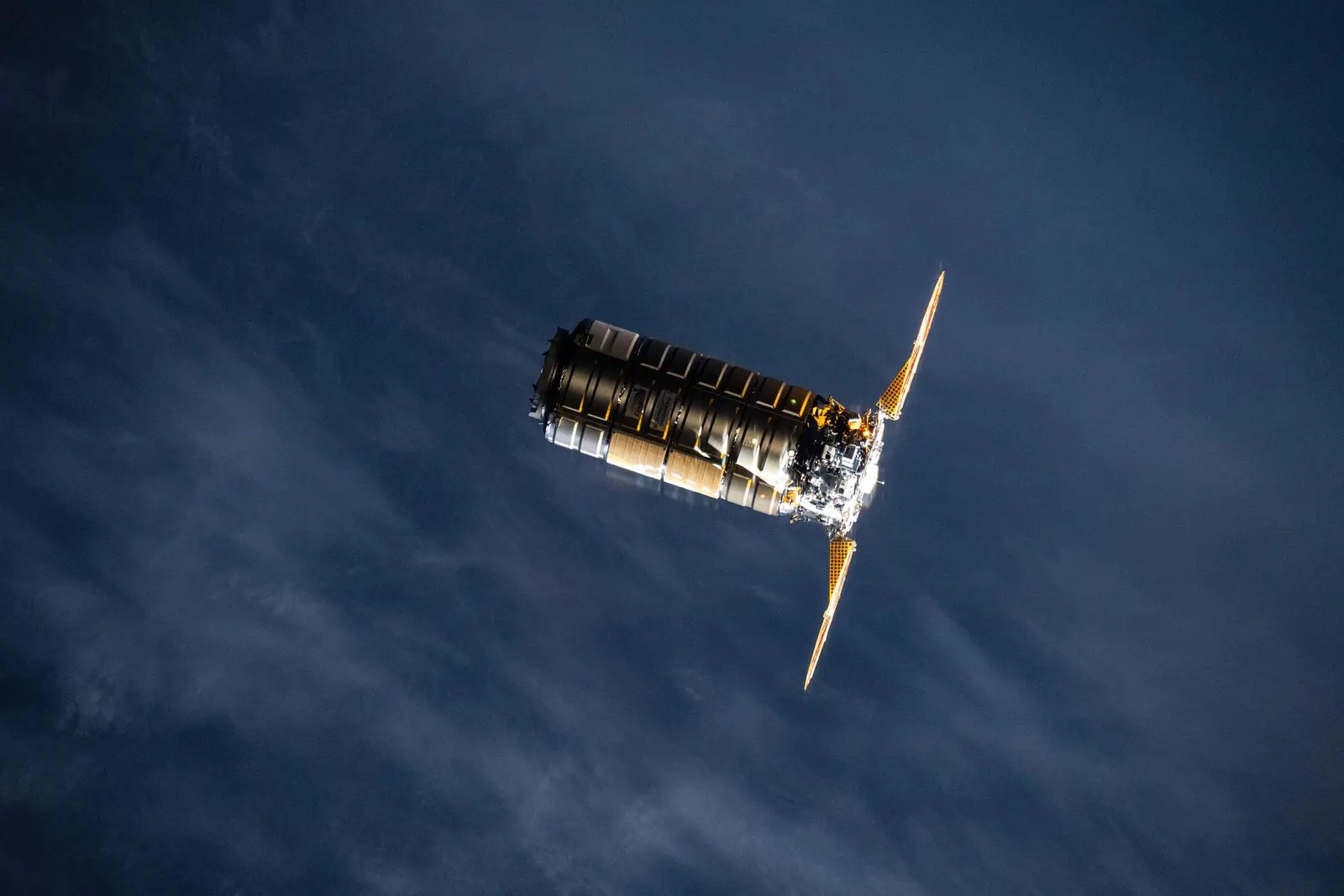
The first Cygnus XL on approach in September 2025, 262 miles above northeastern China just before an orbital sunset. Photo: NASA.
The last 12 meters
Cygnus comes up from underneath, along the line between the station and the center of the Earth. That direction is chosen for safety. A ship held just below the station is moving a little too slowly to stay at that height on its own, so if its thrusters quit it sinks into a lower, faster orbit and drifts down and ahead, away from the station. It stops at hold points on the way up while controllers check it, and it navigates the final stretch with laser ranging against the station itself.
It does not dock. It stops at a capture point about 12 meters from the station and shuts off its thrusters. The rest is done by the crew at a robotics workstation inside the station.
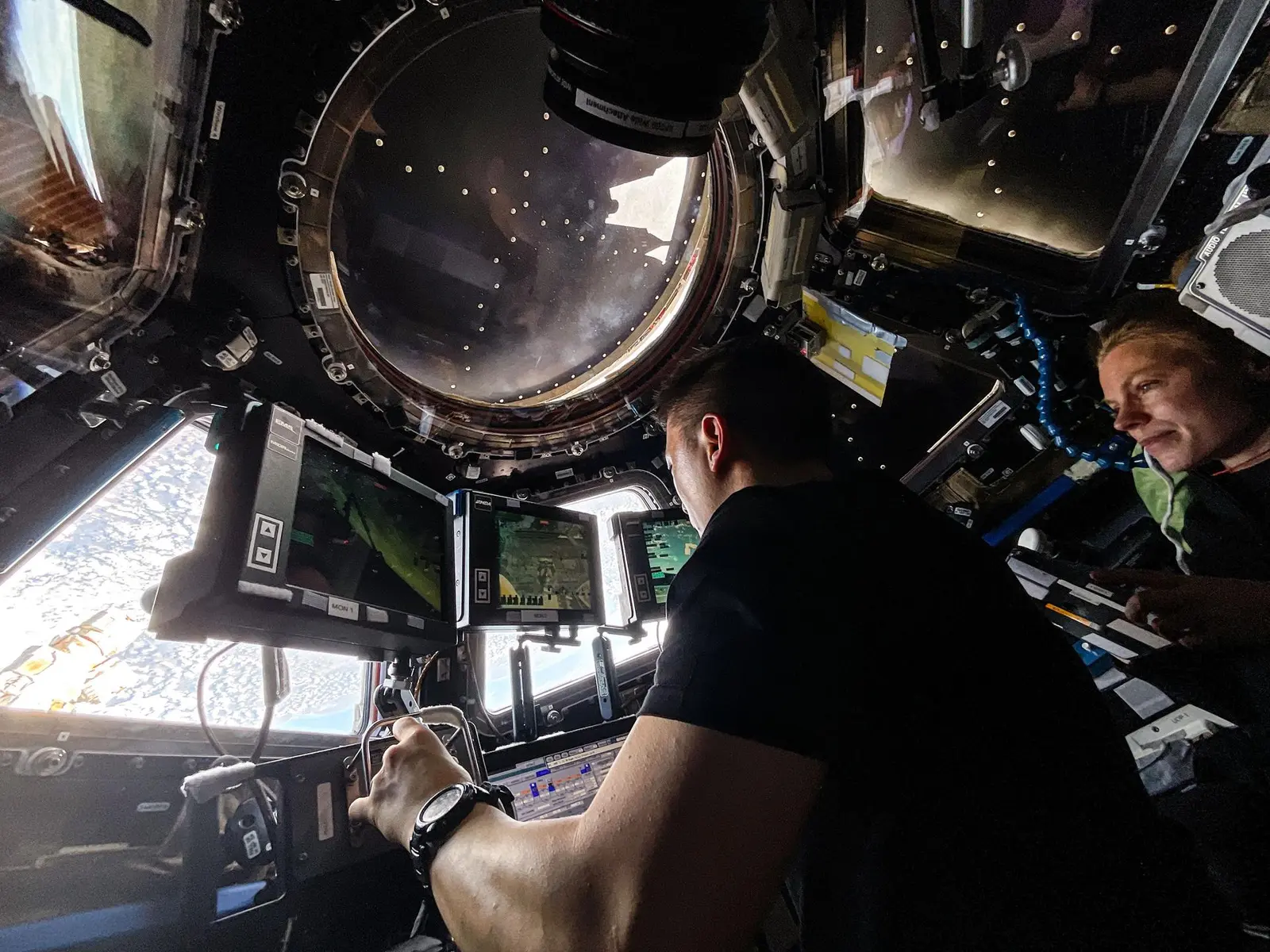
NASA astronauts Jonny Kim and Zena Cardman practicing in the station’s cupola in September 2025, a week before the capture of the first Cygnus XL. Photo: NASA.
The arm is Canadarm2, which is about 17 meters long and has been on the station since 2001. It has seven joints. It first caught a free-flying cargo ship, Japan’s HTV, in 2009. Once it has hold of Cygnus, controllers in Houston take over the arm and move the ship to the Earth-facing port of the Unity module, where sixteen motorized bolts pull it tight.
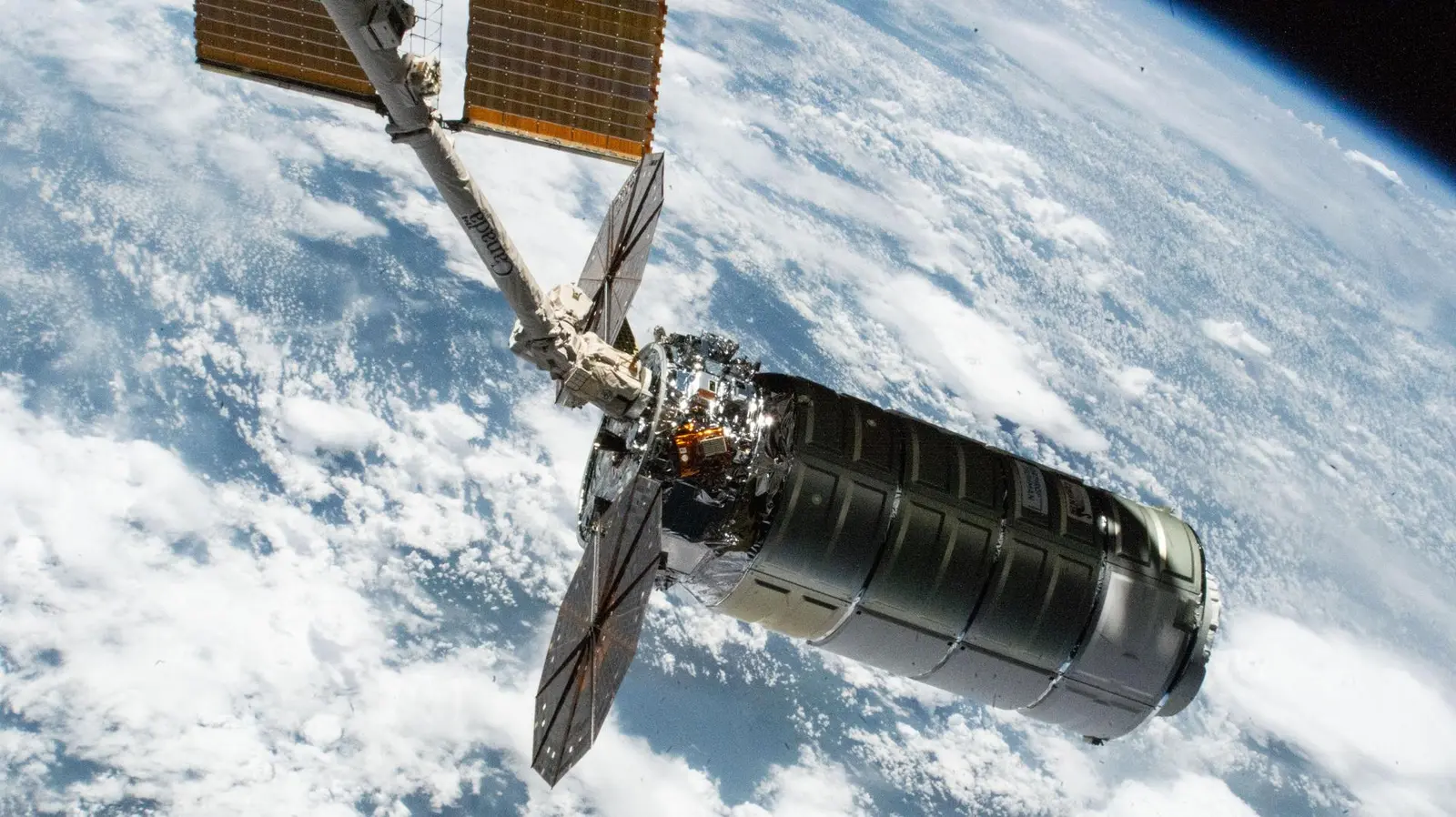
Caught: the first Cygnus XL in the grip of Canadarm2 on September 18, 2025, 257 miles above Tanzania. Photo: NASA.
That is called berthing, and not every visitor does it. Russia’s Progress and Soyuz and SpaceX’s Dragon dock themselves. A Progress freighter launched from Baikonur on Tuesday, November 24 and docked on Thanksgiving morning, two days later, with no arm reaching out to catch it.
Then it is part of the station
Once it is bolted on, the ship is a room. The crew opens the hatch and unpacks for weeks.
It is also an engine. The station flies through the thin outer edge of the atmosphere, which slowly drags it down, so something has to push it back up now and then. The last Cygnus XL did that on August 27, 2026, firing its thrusters for more than 20 minutes to raise the station’s orbit.
How to watch
NASA’s live launch coverage starts at 10:25 a.m. EST on Sunday, November 29. Arrival coverage starts at 1:10 a.m. EST on Tuesday, December 1. All of these times are targets and can move.
You can also look up. The station is one of the brightest things in the night sky when it passes over at dusk or dawn. Whether you get a visible pass in the next few days depends on where you are, and NASA’s Spot the Station will tell you.
The station is in Stowaway’s sky all the time. We draw satellites from public orbital elements: two lines of numbers per object that describe its orbit at one moment, which software then runs forward to say where it is now. Those elements come from tracking, and they go stale. A reboost changes the orbit and the old numbers start to drift from the truth, which is why they have to be refreshed regularly.
So when the Lovell is on its way up, open the sky, find the station, and take the seat. You get about sixteen sunrises a day from up there, and if the launch goes on Sunday, for a couple of days a ship named for the man who flew Apollo 13 will be climbing up from below to meet it.
Sources & further reading: NASA: coverage for Northrop Grumman CRS-25 · NASA station blog, November 24 · NASA: the April 2026 Cygnus XL capture · NASA on the first Cygnus XL’s engine burns · Northrop Grumman: NG-25 · Wikipedia: Cygnus NG-23 · Canadian Space Agency: Canadarm2 · NASA: Progress 97 docks on Thanksgiving Day · Space.com on Progress 97 · Aviation Week on the August reboost · Wikipedia: Gemini 6A and Gemini 7 · NASA: Spot the Station
Photos: NASA / Johnson Space Center (public domain). The lead image is the second Cygnus XL moments before its capture on April 13, 2026.